The Patience Premium: How the Waiting List Became the Most Honest Signal in Luxury
For most of commercial history, availability was a virtue. A product that could be delivered promptly was considered well-managed, well-stocked, and attentive to the customer's time. The inability to fulfill an order immediately was treated as a logistical failure—an embarrassment to be corrected as swiftly as possible.
That calculus has inverted, quietly but completely, at the highest level of the American luxury market. Today, among the most sophisticated buyers—individuals who have spent years refining their understanding of what genuine quality requires—immediate availability has become a source of suspicion rather than satisfaction. And the waiting list, in its most authentic form, has become something that no amount of marketing ingenuity can replicate: proof.
What a Wait Actually Means
To understand why scarcity has become a marker of legitimacy, it is necessary to understand what genuine scarcity actually reflects. There are two kinds. The first is manufactured: a brand limits supply artificially, creating the appearance of demand that does not organically exist, in order to inflate perceived value. Experienced buyers recognize this variety with increasing ease, and their contempt for it is proportionate to the transparency of the manipulation.
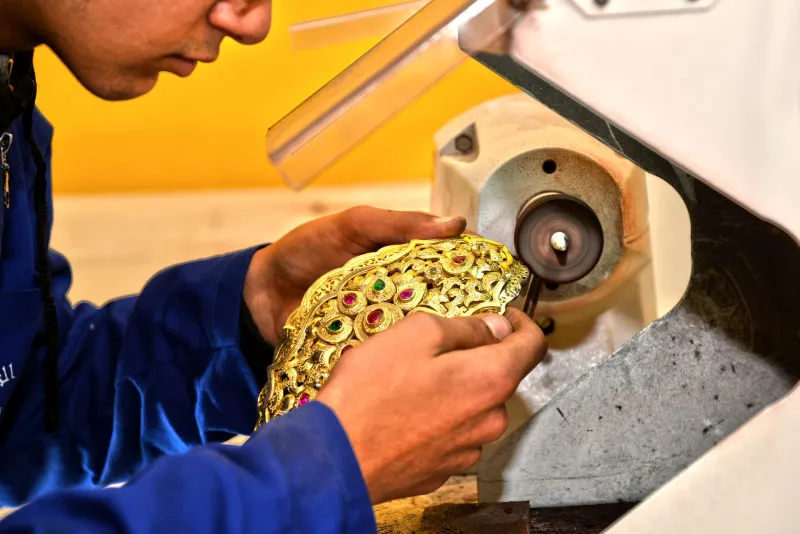
The second kind is structural. It is the natural consequence of doing things properly. A shoemaker who hand-lasts each pair from a single hide, spending four days on a single commission, cannot produce five hundred pairs a month. A small-batch distillery aging its spirit for twelve years in a specific cooperage cannot simply accelerate the calendar to meet a surge in demand. A furniture workshop staffed by three master joiners, each with thirty years of experience, cannot scale to meet a waiting list by hiring ten apprentices.
In these cases, the wait is not a strategy. It is a function of the work itself. And for the buyer who understands this—who has done the reading, visited the workshops, and developed a genuine literacy in what superior production actually requires—the wait is not an inconvenience. It is a form of due diligence, completed on their behalf by the nature of the craft.
The Suspicion of Immediacy
This understanding has produced a fascinating shift in how America's most discerning consumers approach acquisition. Where once the question was "how soon can I have it," the more sophisticated inquiry has become "how long is the wait, and why?"
The reasoning is straightforward once articulated. If a product claiming exceptional quality is available on demand, in unlimited quantities, with no lead time whatsoever, one of two things must be true: either the production process has been engineered for speed at the expense of the very qualities being claimed, or the demand for the product does not actually outpace its supply—which raises questions about its desirability among those who know the category best.
Neither conclusion is flattering. And neither is consistent with the behavior of objects and experiences that have genuinely earned their reputations over time.
Conversely, a waiting period of six months to two years—common among the most respected bespoke tailors in America, certain independent watchmakers, and a growing number of artisanal food and beverage producers—communicates something that no advertisement can manufacture. It says: other people, who also understand what this is, have already made the same decision you are now considering. And it says: the people who make this are not willing to compromise the standard in order to accommodate impatience.
The Buyer Who Waits
There is a self-selection mechanism at work in the waiting list that benefits both the producer and the eventual owner. The experience of waiting—of committing to something before it exists, of holding a place in a sequence rather than simply executing a transaction—transforms the relationship between buyer and object before the object ever arrives.
By the time a commissioned piece reaches its owner, that owner has had months, sometimes years, to consider what they have chosen and why. They have thought about where it will live, how it will be used, what it represents in the context of a life built around considered choices. They arrive at ownership not through impulse but through sustained intention. The object, when it finally comes, carries the weight of that anticipation—and tends to be treated accordingly.
This is not a trivial outcome. Objects that are acquired with patience and intention are maintained with greater care, passed down with greater meaning, and spoken about with greater authority. The buyer who waited becomes, in a very real sense, a better custodian of the work.
Distinguishing Authentic Scarcity from Theater
For the buyer navigating this landscape, the critical skill is the ability to distinguish genuine production constraints from manufactured mystique. Several indicators are useful here.
First, transparency about process. A brand whose scarcity is real will generally be willing—even eager—to explain why. The wait exists because of something specific: a particular technique, a specific material with limited seasonal availability, a workshop of a deliberately constrained size. This explanation is not a sales pitch; it is a factual account of how things are made.
Second, consistency over time. Artificial scarcity tends to fluctuate with commercial pressures—suddenly expanding when revenue targets require it, contracting again when exclusivity needs to be restored. Genuine scarcity is stable, because it is a function of process rather than policy.
Third, the character of the waiting list itself. The most credible programs are managed with the same care as the products they precede. Clients receive substantive updates, not marketing communications. They are treated as participants in the making of something, not as leads being managed through a pipeline.
Patience as Discernment
In a broader cultural sense, the willingness to wait has become one of the clearest expressions of genuine connoisseurship available to the American luxury consumer. In a marketplace saturated with products engineered for instant gratification, the capacity to defer—to choose the thing that cannot be rushed over the thing that is available now—signals a level of understanding that goes far beyond simple wealth.
It signals that the buyer has moved past the acquisition of things and into the cultivation of a relationship with quality itself. That they understand, at some fundamental level, that the most worthwhile things are, almost without exception, the products of time. And that they are willing to honor that reality with their patience.
The waiting list, in this light, is not an obstacle. It is an invitation—to participate, however briefly, in the unhurried tempo of genuine excellence.