Reading the Room: How to Identify True Quality in an Age of Sophisticated Imitation
The modern luxury market has never been more visually persuasive. Campaigns are exquisitely produced. Packaging is engineered to a level of refinement that would have seemed extravagant a generation ago. Retail environments are designed by architects whose fees rival those of the products themselves. The entire apparatus of premium presentation has been so thoroughly professionalized that the surface experience of encountering an expensive product is now largely indistinguishable from the experience of encountering a genuinely excellent one.
This is precisely the problem.
For consumers who care about what lies beneath the surface — who want to know whether the object they are considering is truly extraordinary or merely adeptly marketed — the challenge is no longer finding premium goods. It is developing the perceptual vocabulary to distinguish authentic excellence from its increasingly convincing simulacrum.
What follows is a practical guide to the quiet signals that experienced buyers use to make that distinction.
The Weight and Behavior of Materials
Before any other assessment, experienced buyers attend to materials — not their appearance, but their behavior.
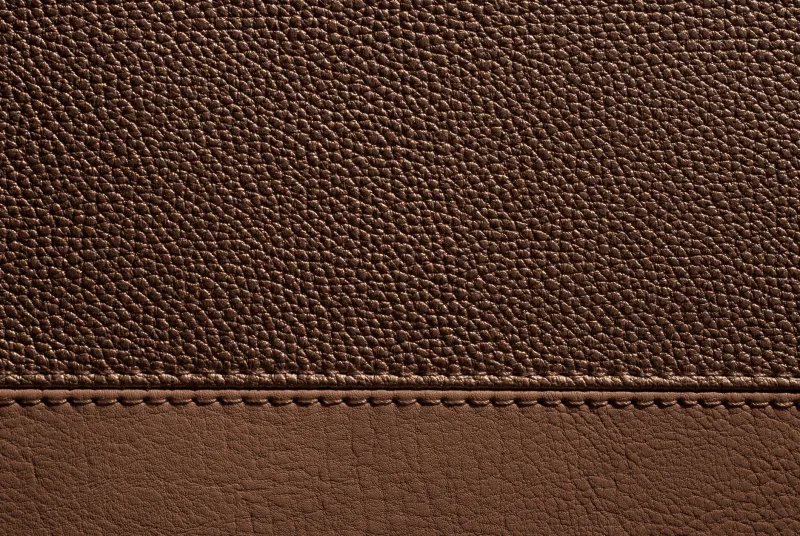
Genuine quality materials have physical characteristics that are difficult to fake at scale. A full-grain leather develops a patina through use that corrected-grain leather — which has been sanded and coated to appear uniform — cannot replicate. The difference is detectable in texture: full-grain leather has a natural, slightly variable surface that responds to touch with warmth. Corrected leather feels consistent in a way that, paradoxically, reads as artificial.
In cashmere, fiber length and ply count are the operative variables. Long-fiber, multi-ply cashmere resists pilling and retains its loft through repeated wear. Short-fiber cashmere — which is used in the majority of mass-market "luxury" knitwear — pills within a season. A simple test: run your fingernail lightly across the surface. Superior cashmere will not immediately produce a fiber trail. Inferior cashmere will.
In hardwoods used for furniture or cabinetry, look for consistent grain patterns that indicate solid construction rather than veneer over engineered substrate. Tap the surface: solid wood produces a resonant, varied tone; veneered particleboard produces a flat, slightly hollow sound.
These are not esoteric tests. They are the habits of buyers who have learned to trust their senses over their eyes.
Manufacturing Tolerances and Fit
The precision with which components fit together is one of the most reliable indicators of production quality — and one of the most consistently overlooked by buyers focused on aesthetics.
In timepieces, the gap between the case back and the case itself should be uniform and vanishingly small. On a truly well-made watch, the case back sits flush with a consistency that requires both precision machining and careful hand-fitting. On a watch that merely looks expensive, this gap is often slightly variable — detectable when you rotate the watch slowly in good light.
In fine footwear, the welt — the strip of leather that connects the upper to the sole — should be stitched with consistent tension and stitch spacing. On a Goodyear-welted shoe made to exacting standards, the stitching is nearly hypnotic in its regularity. On a shoe that simulates the appearance of quality construction, the stitching is adequate but not precise.
In cabinetry and furniture joinery, drawer boxes are particularly revealing. Open a drawer and examine its construction. Dovetail joints — whether hand-cut or machine-cut — indicate a level of structural investment that staple-and-glue construction does not. The drawer should extend smoothly, close with gentle resistance, and sit flush when closed without adjustment.
Finishing: Where Quality Reveals Itself Most Honestly
If materials and tolerances are the skeleton of quality, finishing is its skin — and it is in finishing that the investment of time and human attention is most legible.
In lacquered or painted surfaces, look for the edges. A premium finish wraps consistently around edges and into recesses. A budget finish — even on an expensive product — thins at edges and pools in recesses, creating visible inconsistencies when examined at an angle in raking light.
In polished metal, the transition between different surface treatments (brushed versus polished, for example) should be crisp and unambiguous. On inferior work, this transition is slightly blurred, suggesting that the final finishing was done mechanically rather than by hand.
In stitching on leather goods, turn the piece inside out or examine the interior. The quality of interior finishing is perhaps the single most reliable indicator of a maker's values, because it is the finishing that most buyers never see. A maker who finishes the interior of a bag with the same care as the exterior is a maker whose commitment to excellence is not contingent on whether anyone is watching.
The Sourcing Question
Material sourcing is increasingly a dimension of quality that sophisticated buyers investigate directly — and manufacturers of genuinely exceptional products are generally willing to discuss it in detail.
Where was the wool milled? Where was the leather tanned, and by what process? Were the diamonds set in this piece graded independently? Is the timber in this furniture certified, and from what region?
These questions serve two purposes. First, they surface factual information about quality inputs. Second — and perhaps more importantly — they reveal the maker's relationship to transparency. Producers who are proud of their supply chain answer these questions with specificity and enthusiasm. Producers who are not tend to respond with generalities.
"We use the finest available materials" is not an answer. The name of the tannery is an answer.
Learning to See What Is Not Shown
The deepest level of quality literacy is the ability to notice what a product does not do — what it resists, omits, or refuses.
A truly exceptional pen does not have a logo embossed large enough to read across a conference table. A genuinely superior piece of luggage does not need to announce its provenance through hardware stamping on every visible surface. A remarkable piece of furniture does not require a label to justify its price.
The restraint of genuinely excellent producers is itself a quality signal. It communicates a confidence that the work will speak without assistance — that the buyer who matters will understand what they are looking at without being told.
Developing this kind of perceptual fluency takes time and exposure. It requires handling exceptional objects alongside merely expensive ones, asking questions that manufacturers sometimes find uncomfortable, and resisting the considerable pressure of marketing environments engineered to substitute emotional experience for critical evaluation.
But the investment is worthwhile. Because once you can read the quiet signals of genuine quality — the tolerances, the finishing, the sourcing, the restraint — the market looks entirely different. And so does what you choose to bring into your life.