The Vintage Imperative: How Ultra-Affluent Americans Are Redefining Luxury Through Restoration
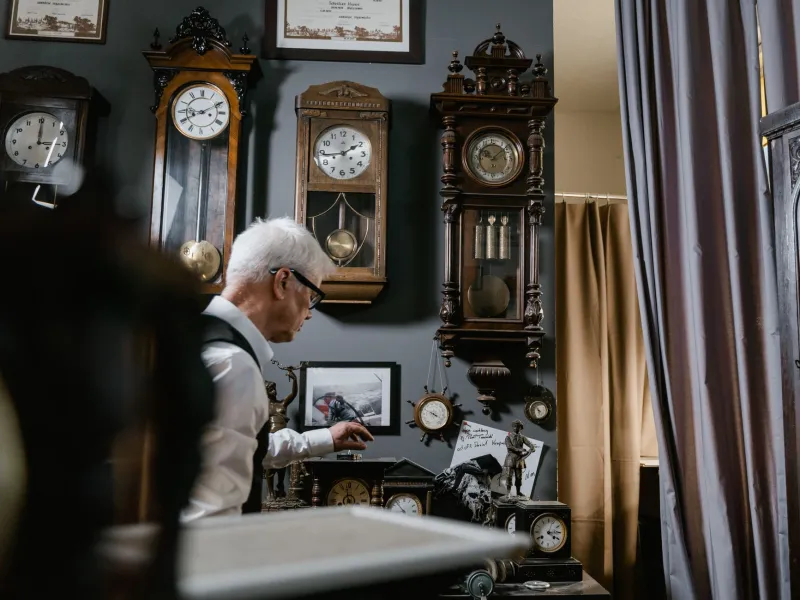
Not long ago, the pinnacle of luxury consumption was defined by newness. The unworn shoe. The unread first edition still in its slipcase. The automobile delivered directly from the factory floor, its odometer reading zero. Newness signaled access, and access signaled status. The logic was clean and widely understood.
That logic is now being quietly dismantled by the very consumers who once embodied it.
Across the United States, a measurable and accelerating trend has taken hold among ultra-high-net-worth individuals: the deliberate preference for restored, vintage, and pre-owned luxury over contemporary releases. This is not the behavior of buyers who cannot afford new. It is the behavior of buyers who have concluded that new is, in many cases, insufficient.
The Craftsmanship Argument
The foundation of the vintage preference is, at its core, a quality argument — and it is one that stands up to scrutiny.
Many of the most coveted vintage luxury goods were produced during periods when the economic incentives of mass production had not yet reshaped the way high-end goods were made. A Swiss mechanical watch from the 1960s was assembled by a smaller team of specialists, each responsible for a narrower set of operations and therefore more deeply accountable for the quality of their contribution. A mid-century American automobile was built with steel of a gauge that contemporary manufacturers have long since abandoned in favor of lighter, more cost-efficient alternatives.
"The materials conversation is unavoidable," says Marcus Webb, a collector and consultant who advises private clients on vintage acquisition strategies across categories from horology to couture. "When you handle a Bakelite-cased radio from the 1940s or a pair of shoes made on a last that no longer exists, you are holding evidence of a supply chain and a production philosophy that simply cannot be replicated today — not because the skills have disappeared entirely, but because the economics no longer support them."
This is not romanticism. It is a technical observation with real implications for buyers who care about what they own.
Narrative Depth as a Form of Value
Beyond the craftsmanship argument lies something more difficult to quantify but equally compelling: the value of history.
A vintage Patek Philippe that passed through several generations of a single family carries within it a narrative that no amount of contemporary marketing can manufacture. A restored 1971 Porsche 911 that competed in regional racing circuits before being meticulously returned to concours condition is not merely an automobile. It is a document.
American collectors have become increasingly sophisticated in their appreciation of this narrative dimension. The provenance research that once characterized only the fine art market has migrated decisively into watches, automobiles, couture, furniture, and even vintage wine and spirits. Buyers are commissioning detailed ownership histories, authentication reports, and restoration documentation with the same rigor previously reserved for Old Master paintings.
"Provenance has become a luxury material in its own right," notes Alexandra Drummond, a specialist at a Chicago-based auction house that has seen its vintage luxury category grow by more than forty percent over the past three years. "Clients are paying premiums not just for condition but for story. They want to know who owned this, where it traveled, what it witnessed."
The Sustainability Calculus
The environmental dimension of the vintage preference is real, though the most sophisticated buyers are careful not to reduce their choices to a single motivation.
Restoring and acquiring pre-owned luxury goods does, objectively, reduce demand for new production — a fact with measurable environmental implications. The carbon footprint of a meticulously restored vintage garment is a fraction of that associated with producing a comparable new piece. For buyers who are simultaneously navigating the demands of environmental stewardship and the desire for exceptional quality, vintage acquisition represents a coherent resolution.
But to characterize the vintage imperative as primarily an environmental statement would be to misunderstand its driving logic. The buyers most deeply committed to this approach are motivated first by quality and second by narrative. Sustainability is, for most of them, a welcome confirmation of a decision already made on other grounds.
The Restoration Economy in Practice
The infrastructure supporting this shift has grown substantially. Specialist restoration workshops — for timepieces, automobiles, leather goods, and textiles — have expanded their capacity and elevated their craft to meet demand from a more discerning clientele. Platforms that once catered to entry-level pre-owned buyers have developed white-glove services tailored to ultra-high-net-worth clients, complete with independent authentication, condition grading, and concierge acquisition support.
For buyers entering this market, a few principles consistently distinguish successful acquisition from costly mistakes:
Prioritize documentation. The value of a vintage piece is materially affected by the quality of its paper trail. Service records, ownership histories, original receipts, and authentication certificates are not bureaucratic niceties — they are core components of the asset.
Engage category specialists. The vintage market rewards deep knowledge. A generalist advisor may understand luxury broadly but lack the granular expertise to identify the specific production runs, material variants, or restoration red flags that distinguish exceptional pieces from well-presented ones.
Understand restoration philosophy. There is a meaningful difference between a piece that has been restored to original specification and one that has been cosmetically refreshed to appear vintage. The former preserves and may enhance value; the latter frequently destroys it. Ask detailed questions about what was done, by whom, and with what materials.
Consider the total ownership experience. Vintage acquisition is not purely transactional. The process of research, authentication, and curation is itself a form of engagement with excellence — one that many buyers find as rewarding as ownership itself.
A New Definition of Excellence
The restoration economy is, at its deepest level, a philosophical statement about what excellence means. It suggests that the most refined form of ownership is not the acquisition of the newest and most expensive available option, but the identification and stewardship of the genuinely best — wherever and whenever it was made.
For the ultra-affluent Americans driving this trend, the choice is not between old and new. It is between manufactured novelty and authenticated depth. Between the appearance of excellence and its substance.
At SuperPerfect, that distinction has always been the point.