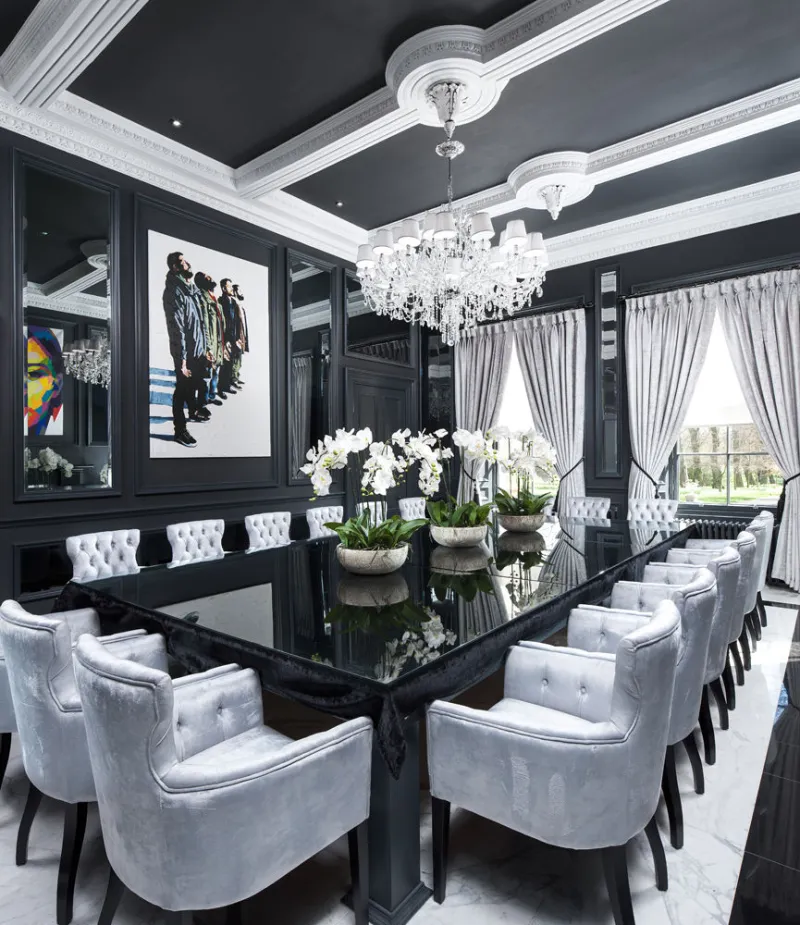
The Grammar of Absence: How the Most Masterful Designs Speak Through What They Leave Out
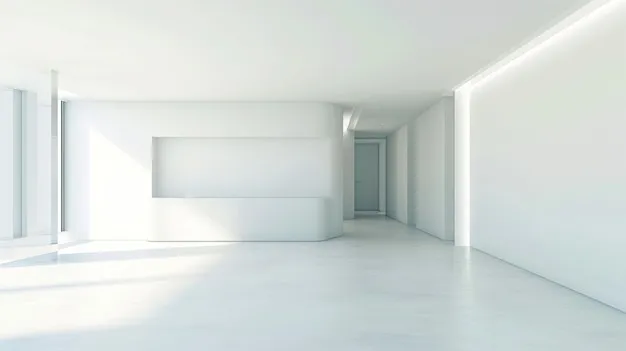
Photo: minimalist luxury interior design empty space architecture, via img.freepik.com
There is a particular kind of silence that only the most attentive ear can appreciate — the pause between musical phrases that gives a melody its emotional weight, the breath before a sentence that makes the words that follow land with precision. Designers, architects, and craftspeople who operate at the highest levels understand this principle instinctively. They have learned, often through years of disciplined practice, that the space around an object is not wasted real estate. It is the message itself.
For the discerning American consumer navigating a market flooded with products competing loudly for attention, this distinction matters enormously. Price, after all, is easy to manufacture. Restraint is not.
The Psychological Weight of Empty Space
Negative space — the deliberate absence of form, color, or ornament — carries a cognitive load that most consumers process without consciously recognizing it. When a room contains fewer, more carefully chosen objects, the mind is invited to slow down, to examine, to appreciate. When a product's surface is stripped of unnecessary detail, the eye travels to what remains with far greater intensity.
Researchers studying consumer perception have long noted that environments and objects associated with premium status tend to be characterized by lower visual density. Apple's retail stores, for instance, built their reputation not merely on the products displayed within them but on the vast, uninterrupted expanses of white oak and polished concrete that surrounded those products. The emptiness was not accidental. It was engineered to signal that what was present deserved undivided attention.
This psychology extends well beyond retail architecture. It operates in the grammar of a well-constructed wristwatch dial, in the layout of a bespoke stationery suite, in the spare arrangement of a Michelin-starred tasting menu. Wherever genuine mastery exists, there tends to be an almost austere willingness to let things breathe.
What Restraint Actually Costs
It would be a mistake to assume that minimalism is simply the cheaper option — that brands stripping away ornamentation are doing so to reduce production costs. In most cases, the opposite is true. Achieving a surface that communicates through absence requires extraordinary precision. Every remaining element must be flawless, because there is nothing else to draw the eye away from imperfection.
Consider the construction of a high-end ceramic vessel by an American studio potter working in the tradition of Japanese wabi-sabi aesthetics. The form may appear deceptively simple — a gentle curve, an unadorned glaze, a single deliberate asymmetry. Yet that simplicity demands a command of material and technique that ornate decoration frequently conceals. A baroque surface can hide inconsistencies. An empty one cannot.
The same principle governs architectural spaces designed by firms such as Tadao Ando's studio, whose work has significantly influenced American luxury residential design over the past two decades. Ando's signature use of bare concrete walls and pools of natural light communicates an almost monastic commitment to the essential. Clients who commission work in this tradition are not paying less for the absence of decoration. They are paying a considerable premium for the mastery required to make that absence feel intentional rather than incomplete.
The Pause as a Luxury Signal
In the realm of high-end services, restraint operates through timing rather than visual form. The most exceptional hospitality experiences are distinguished, in part, by what staff members refrain from doing. A sommelier at a truly fine dining establishment does not hover. A personal stylist of genuine caliber does not overwhelm a client with options. A bespoke tailor does not rush a fitting with unnecessary conversation.
These absences — of intrusion, of noise, of excessive gesture — are among the most meaningful signals that a service operates at a level above the ordinary. They communicate that the provider is confident enough in the quality of what is being offered to allow it to exist without constant reinforcement. There is a profound self-assurance embedded in knowing when to be quiet.
This logic has filtered into American wellness culture as well, where the most sought-after retreats increasingly distinguish themselves not through elaborate programming but through the deliberate creation of unstructured time. The most exclusive spa resorts in destinations such as Sedona, Arizona, or the Hudson Valley do not fill every hour with scheduled activities. They offer the radical luxury of nothing — long, unhurried afternoons with no agenda, no notifications, no performance required.
Learning to Read the Absence
For the sophisticated consumer, developing fluency in this visual and experiential grammar is itself a form of connoisseurship. It requires a willingness to resist the instinct that equates abundance with value — an instinct that is, it must be acknowledged, actively cultivated by much of the consumer marketplace.
Training the eye to recognize meaningful restraint involves asking a different set of questions when evaluating a product or experience. Not merely what is here, but what has been deliberately omitted, and why? Not simply how much does this cost, but what level of discipline was required to arrive at this particular form?
A leather good from a heritage American saddler, for instance, may feature no visible logo, no decorative stitching, no hardware beyond what the function demands. To an untrained eye, it might appear modest. To someone who understands the material and the making, that restraint reads as an unmistakable declaration of confidence — the kind that only comes from a long relationship with excellence.
The Discipline Behind the Void
Ultimately, the most important insight about negative space is that it is never passive. It is the product of active, often arduous decision-making. Every element that does not appear in a truly masterful design was considered and consciously set aside. The architect chose not to add the window. The product designer chose not to include the feature. The chef chose not to add the sauce.
This discipline — the capacity to stop, to resist, to trust that less will communicate more — is among the rarest qualities in any creative or commercial endeavor. It requires not only technical skill but a particular kind of intellectual courage: the willingness to be misunderstood by those who measure value in volume.
For those who have developed the sensibility to appreciate it, however, that silence between notes is not emptiness at all. It is the sound of mastery, speaking in its most precise and uncompromising voice.