One Thing, Done Perfectly: Why the Wealthiest Americans Are Abandoning Versatility
There is a particular satisfaction in owning something that does exactly one thing — and does it better than anything else on earth. It is a satisfaction that cannot be replicated by a device offering forty functions, most of which will never be used, and none of which will be executed with true mastery. Among America's most sophisticated consumers, this realization has crystallized into a deliberate purchasing philosophy: the deliberate, sometimes radical, embrace of the single-purpose object.
This is not a rejection of modernity. It is, in many respects, its most refined expression.
The Tyranny of the Multi-Tool
The consumer marketplace has spent the better part of three decades celebrating convergence. Smartphones absorbed cameras, music players, maps, and notepads. Kitchen appliances promised to roast, steam, air-fry, and dehydrate in a single footprint. Luggage sprouted charging ports. Watches became health monitors. The underlying logic was seductive: why own several things when one object can approximate them all?
But approximation, it turns out, is precisely the problem.
When a product is engineered to perform multiple functions, every individual function becomes a compromise. Resources — whether engineering hours, material budget, or spatial design — must be divided. The result is a category of objects that are competent across the board and exceptional at nothing. For consumers whose standard is excellence rather than adequacy, this trade-off is increasingly unacceptable.
The ultra-affluent, who have always had the financial latitude to own multiple specialized items, are now making that choice consciously and conspicuously. What once might have seemed like extravagance — owning a dedicated espresso tamper, a single-purpose writing instrument, a knife forged exclusively for one type of cut — is being reframed as the only logical response to a market saturated with what critics have begun calling "versatility theater."
The Psychology of Singular Focus
There is a cognitive dimension to this shift that deserves serious attention. Behavioral researchers have documented, with considerable consistency, that an abundance of options does not liberate the human mind — it burdens it. The psychologist Barry Schwartz popularized this concept as the "paradox of choice," and its implications extend well beyond the supermarket aisle.
When a tool is capable of many things, the user must perpetually negotiate with it. Which mode? Which setting? Which attachment? The mental overhead accumulates quietly, eroding the pleasure of the object itself. A single-purpose tool, by contrast, demands nothing of the user except mastery of its one domain. The relationship becomes cleaner, deeper, and ultimately more rewarding.
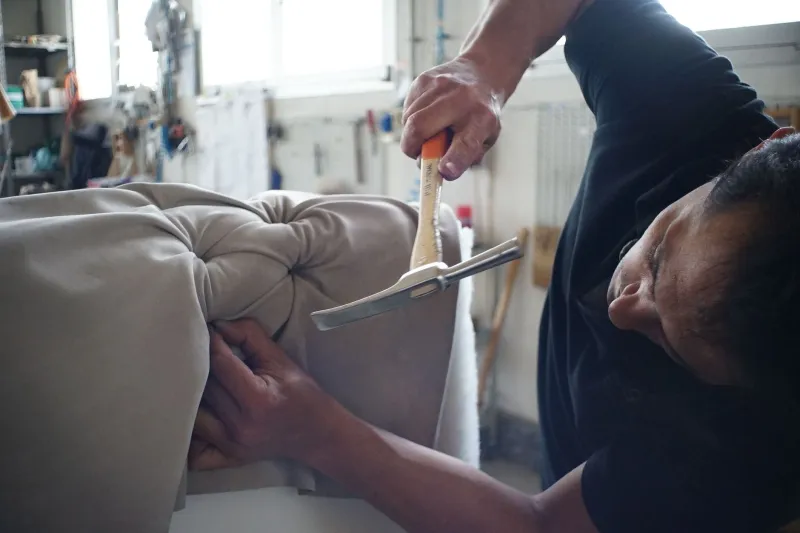
Among those who have built considerable expertise in their fields — collectors, craftspeople, serious hobbyists, and professionals of distinction — this dynamic is already well understood. A seasoned woodworker does not reach for a multi-bit screwdriver when a dedicated Japanese chisel will serve with greater precision and far greater satisfaction. The tool becomes an extension of intent rather than a hedge against uncertainty.
What Specialization Signals
Beyond the practical, there is an unmistakable social dimension to this trend. In circles where the accumulation of objects no longer carries the status it once did, the specificity of one's possessions has emerged as the more refined signal.
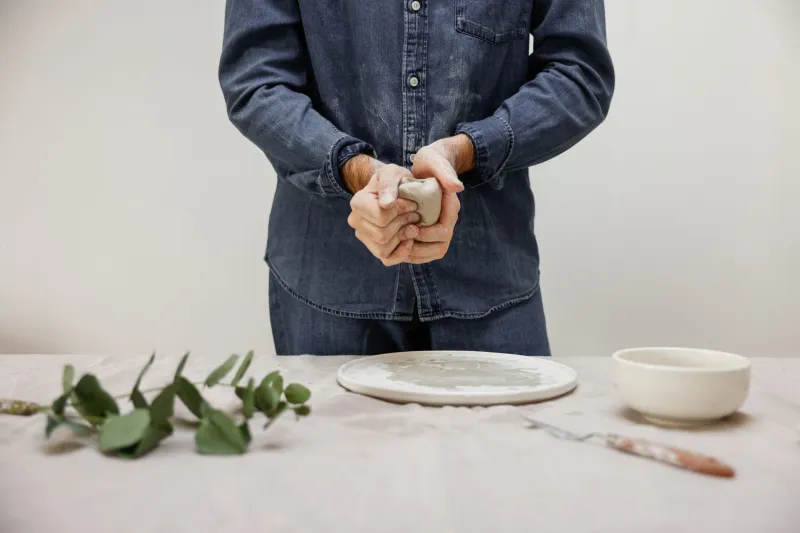
To own a single-purpose item of exceptional quality — a hand-thrown ceramic vessel designed exclusively for matcha preparation, a mechanical watch engineered solely to track a second time zone with no additional complications, a pen balanced and weighted for a specific grip style — communicates something that a multi-function alternative simply cannot. It signals that the owner has moved beyond the anxious hedging of the aspirational consumer and arrived at the calm confidence of someone who knows exactly what they want.
This is discernment made visible. And in environments where wealth itself is no longer a distinguishing marker, the quality and intentionality of one's choices carry far greater weight.
The Market's Response
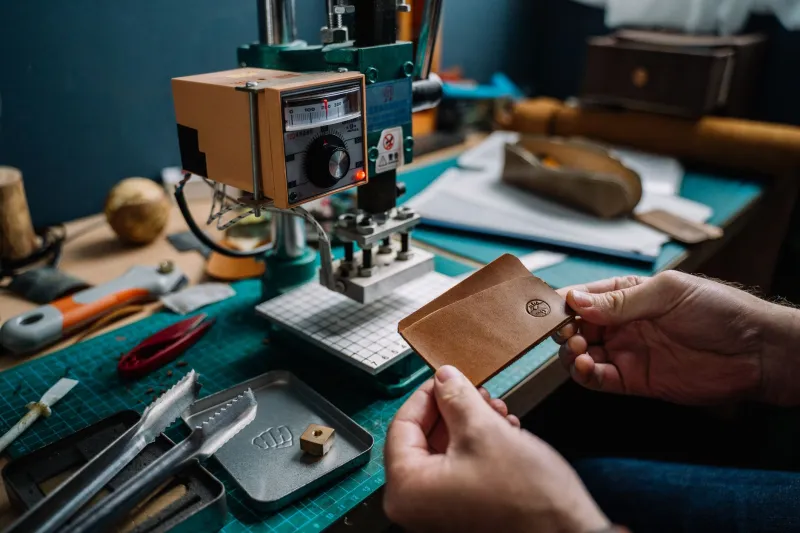
Brands attuned to this sensibility are responding with quiet enthusiasm. Across categories — culinary, horological, stationery, audio, and beyond — a new wave of manufacturers is doubling down on singular excellence rather than expanding feature sets. Small-batch knife makers in Oregon and Tennessee are producing blades designed for one cutting task. Independent pen makers are crafting instruments calibrated to a single nib size and ink weight. Audio companies are releasing amplifiers with no digital inputs whatsoever, stripped of everything extraneous to the pure analog signal path.
These are not niche curiosities. They are products commanding serious prices and generating serious waiting lists. Their makers understand something essential: when you commit entirely to one purpose, you can pursue perfection in that domain without apology or compromise.
Deliberate Limitation as a Form of Luxury
Perhaps the most counterintuitive aspect of this movement is what it reveals about the nature of luxury itself. True luxury, it seems, was never really about having more options. It was always about having the right one — and having it executed to a standard that leaves nothing to be desired.
The single-purpose object, in this light, is not a limitation. It is a declaration. It announces that its owner has done the work of discernment, has arrived at a considered conclusion, and has no need for the security blanket of versatility. There is a confidence in that posture that no multi-function product, however sophisticated, can replicate.
In an age of feature bloat and engineered complexity, choosing simplicity — real, deliberate, uncompromising simplicity — may be the most radical luxury statement available.