The Long Education: Why America's Most Refined Consumers Are Learning to Cherish the Difficulty

There is a moment in the acquisition of any real skill — whether it arrives during the third month of struggling with a Japanese knife technique, or the second year of learning to identify the structural subtleties of a Burgundian vintage, or the fifth attempt at executing a particular woodworking joint — when the difficulty itself becomes the point. Not an obstacle to be overcome on the way to competence, but the very substance of what is being pursued.
For a growing number of wealthy Americans, this moment has become the most coveted experience available to them. Not because they are masochists, but because they have exhausted the satisfactions that money alone can provide — and discovered that the one thing currency cannot purchase is genuine expertise earned through sustained effort.
The Exhaustion of Frictionless Acquisition
The infrastructure of modern commerce has grown extraordinarily skilled at eliminating friction. Same-day delivery, concierge purchasing services, and instant digital access have compressed the distance between desire and fulfillment to near zero. For most consumers, this is an unambiguous improvement. For those at the highest levels of affluence — for whom financial friction has never been the limiting factor — the elimination of all other forms of difficulty has produced an unexpected consequence: the erosion of meaning.
When anything can be obtained immediately, the act of obtaining it carries diminishing psychological weight. The object arrives, is admired briefly, and joins a collection of other objects obtained with equal ease. The experience of acquisition, stripped of anticipation and effort, becomes hollow in proportion to its convenience.
This is not a new observation. Philosophers and economists have noted for centuries that value is partly a function of the effort invested in its pursuit. What is new is the degree to which ultra-affluent Americans are acting on this understanding — deliberately reintroducing difficulty, time, and learning curves into their lives as a corrective to the frictionlessness that wealth makes possible.
Mastery as the New Acquisition
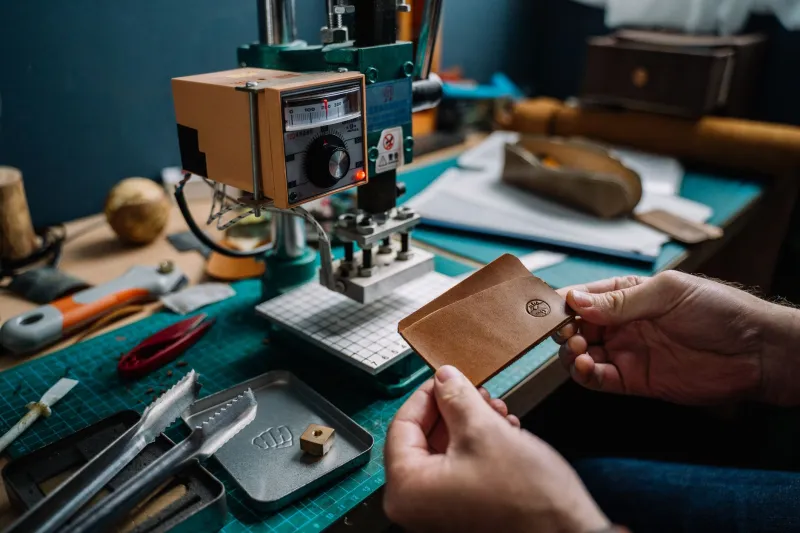
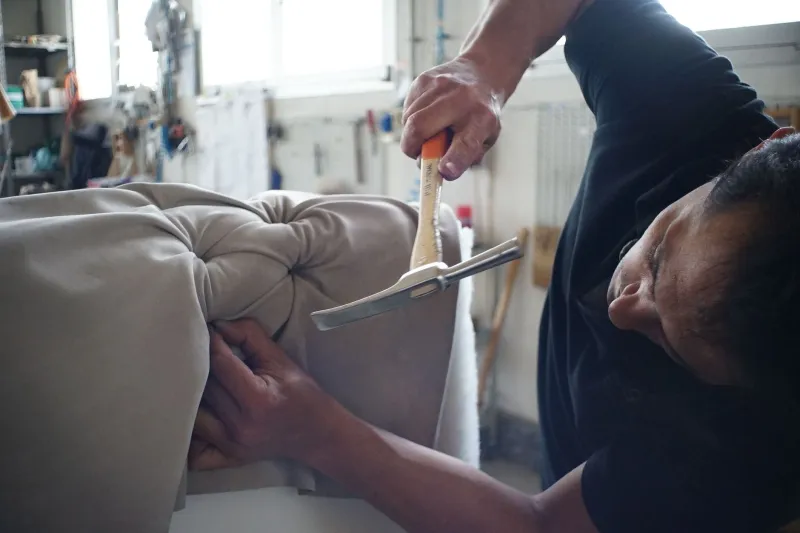
The shift manifests in specific, observable ways. Enrollment in serious culinary programs — not the weekend hobbyist variety, but the kind that demand genuine commitment over months — has increased among high-net-worth individuals who already have access to the finest restaurants and private chefs. Demand for extended apprenticeship experiences with master craftspeople, where participants work alongside artisans in exchange for genuine instruction rather than a curated tourist encounter, has grown considerably in recent years.
In the world of wine, a similar pattern is evident. Rather than simply purchasing access to exceptional bottles, a segment of serious collectors is investing in the study required to evaluate those bottles independently. Master Sommelier and WSET Diploma programs, both demanding multi-year commitments, have seen increased interest from individuals who could easily afford to hire expertise rather than develop it.
The same dynamic appears in watchmaking, leatherwork, fly fishing, and classical music performance. In each case, the common thread is a willingness — an active desire — to be a beginner again. To occupy the uncomfortable position of the learner rather than the connoisseur. To accept that genuine excellence in any domain takes time that cannot be compressed by any amount of financial resource.
The Particular Pleasure of the Learning Curve
What those who have pursued this path consistently report is that the learning curve itself — the period of deliberate struggle before competence begins to emerge — is not merely an unpleasant prerequisite to the reward. It is, in many cases, the most intensely pleasurable phase of the entire endeavor.
This is consistent with what researchers studying the psychology of flow and engagement have described for decades. The state of optimal engagement — in which challenge and capability are closely matched, requiring full attention without producing paralysis — is most reliably accessed during the process of skill acquisition. Once mastery is achieved, the challenge must be continuously renewed to maintain that engagement. Difficulty, properly calibrated, is not the enemy of enjoyment. It is its engine.
For individuals who have achieved considerable professional mastery in their fields — and whose daily lives are largely structured around the exercise of existing competence — the experience of genuine novicehood can be profoundly refreshing. It reactivates forms of attention and engagement that routine expertise tends to suppress.
Patience as Provenance
There is a parallel phenomenon in the relationship between affluent Americans and the objects they collect — specifically, objects that require time rather than money to reach their fullest expression. Aged spirits, long-cellared wines, and slowly patinated leathers are obvious examples. But the category extends further: bespoke clothing that requires multiple fittings over several months before achieving its final form; custom musical instruments that must be played in over years before their tonal character fully develops; garden landscapes designed around a ten-year maturation plan.
In each case, the temporal dimension of the object — the fact that it cannot be rushed to completion regardless of what one is willing to pay — is precisely what makes it valuable to the most sophisticated buyers. Time has become a material. Patience has become provenance.
This represents a significant departure from the dominant luxury paradigm of the past several decades, in which speed of delivery was treated as a service virtue and waiting lists were regarded as an unfortunate inconvenience to be minimized. For a certain class of buyer, the waiting list has been reinterpreted entirely. It is no longer an obstacle. It is evidence that the object in question cannot be mass-produced, that its creation is genuinely constrained by human capacity and time, and that its eventual arrival will carry the weight of anticipation properly accumulated.
Earned Excellence and Its Discontents
It would be naive to ignore the complexity embedded in this cultural shift. The luxury of time — the ability to spend months or years developing a skill or awaiting a commission — is itself a product of privilege. Not everyone can afford to be a patient learner. The celebration of mastery-as-luxury risks romanticizing a condition that is, for many people, simply inaccessible.
And yet, the underlying insight that genuine excellence requires sustained investment of attention and effort — that there are no shortcuts to real competence, regardless of one's financial position — carries a democratic truth beneath its elite surface. The wealthiest Americans who are rediscovering the value of the long education are not discovering something new. They are recovering something old: the understanding that the most meaningful things in life resist purchase, and that this resistance is not a flaw but a feature.
For those with the resources to pursue almost anything instantly, choosing the slow path is a deliberate act of self-discipline. It is, perhaps, the most refined choice available.