The Access Economy: When Whose Hands You Know Matters More Than What You Own
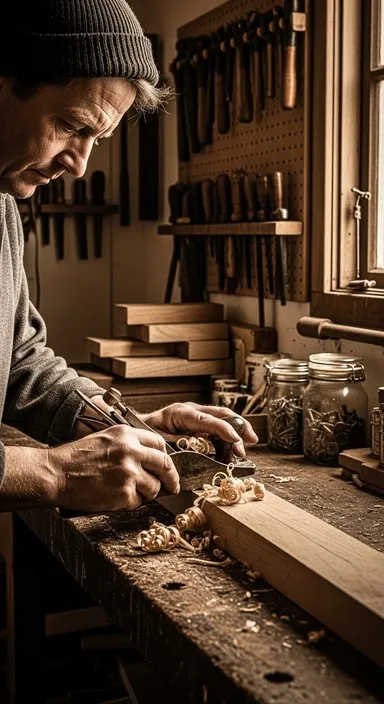
Photo: master craftsman working in workshop hands close up warm light, via images.stockcake.com
Walk through the right neighborhoods in Austin, Nashville, or Palm Beach, and you will notice something curious about the newest wave of American affluence. The garages are not fuller. The closets are not larger. What has expanded is the contact list.
A retired tech executive in Scottsdale keeps the number of a master saddlemaker on speed dial. A Manhattan financier has not bought a new suit in three years — he flies his tailor in from Naples twice annually. A family in Marin County pays a retainer to a luthier who maintains a single guitar, obsessively. None of these people describe themselves as collectors. They describe themselves, increasingly, as patrons.
From Acquisition to Apprenticeship
The sociologist Thorstein Veblen gave us the phrase "conspicuous consumption" more than a century ago, and for generations it described how Americans signaled success: visible, purchasable, comparable. But a subtler economy has taken root among those who have exhausted the pleasures of acquisition. Call it the access economy — a marketplace in which the scarce commodity is not the object but the relationship with the person capable of making, maintaining, or perfecting one.
The logic is straightforward once you sit with it. Objects depreciate, can be counterfeited, and — crucially — can be purchased by anyone with sufficient funds. A relationship with a master craftsperson cannot. There is no website checkout for the upholsterer with a two-year waiting list who agrees to take you on. Access must be earned, requested, or inherited. It is, by its very nature, un-counterfeitable.
The New Patronage
What looks like indulgence is, in many cases, closer to old-world patronage. The wealthy Americans commissioning bespoke cabinetry or retaining private chefs are not simply buying meals or furniture. They are subsidizing excellence — keeping alive skill sets that the mass market no longer supports — and in exchange receiving something no retail experience can provide: the education of proximity.
Spend a morning with a master restorer and you begin to see wood differently. Watch a bespoke shoemaker take measurements and you learn to read feet, gait, posture. This is the quiet dividend of the access economy. The money buys the master's time; the time transmits a standard. Many clients describe the arrangement in almost educational terms — a correction, they say, to a lifetime of buying badly.
What This Means for Premium Service Businesses
For those who operate at the upper tier of American craft and service, the implications are significant. The businesses thriving under this model share recognizable traits. They cap their client lists. They communicate through scarcity of availability rather than scarcity of marketing. They charge for judgment, not hours.
Consider the economics of a private chef in a major American metro. The hourly rate is substantial, but the true product is the chef's accumulated taste — decades of palate, sourcing relationships, and kitchen judgment compressed into a Tuesday dinner. Clients are not paying for food. They are paying for the distillation of a career.
The same holds for the bespoke tailor, the conservator, the master gardener. Their prices function less as fees than as filters. High enough to ensure commitment; calibrated enough to signal seriousness. The best of them, notably, often decline work. Nothing communicates value in the access economy like the capacity to say no.
The Status Inversion
There is an irony here worth savoring. For decades, luxury marketing in the United States trained consumers to display. The logo, the label, the unboxing filmed for an audience. The access economy inverts this entirely. Its most devoted participants are conspicuously undemonstrative. The tailor's stitching is invisible under the jacket. The chef's work is consumed, not displayed. The restorer's triumph is that the chair looks as though nothing happened to it at all.
Status, among this set, is legible only to those who already know what to look for — which is precisely the point. A Rolex on a wrist speaks to strangers. A relationship with the watchmaker who regulates it speaks to almost no one. One is purchase. The other is position.
Where This Goes Next
As the cohort of Americans who came of age during the great accumulation enters its most affluent decades, expect the access economy to professionalize. Waiting lists will formalize. Patronage structures — part retainer, part commission, part apprenticeship — will become codified. And the premium service businesses that understand the shift will stop selling deliverables altogether. What they will sell, and what the most refined buyers will gladly pay for, is something older than commerce itself: a place at the workbench, watching a master at work.
Excellence, it turns out, was never really for sale. But access to it just might be the last honest luxury.